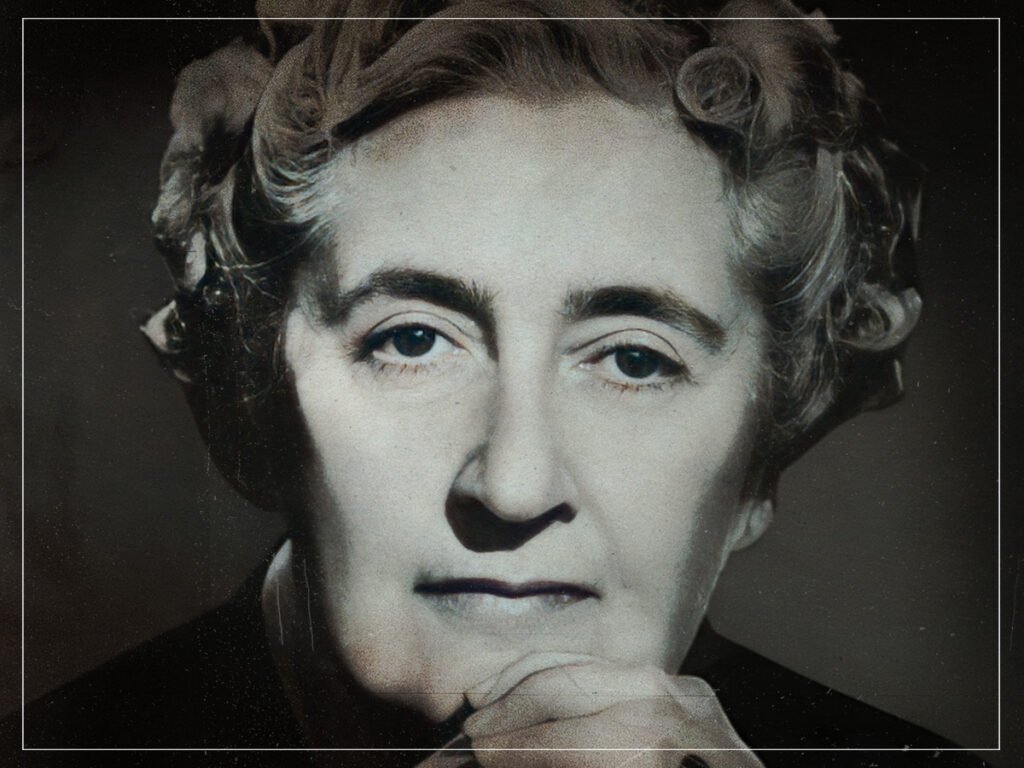
Few names evoke the golden age of detective fiction quite like Agatha Christie. Her remarkable journey, starting with Agatha Christie's original novel & author, not only introduced two of literature's most enduring sleuths but also laid the groundwork for a prolific career that captivated — and continues to captivate — billions worldwide. If you've ever found yourself entangled in a web of clever clues and shocking revelations, you have the "Queen of Crime" to thank for setting the standard.
Her very first published work wasn't just a book; it was the spark that ignited a publishing phenomenon, cementing her legacy as the best-selling novelist of all time. Let’s unravel the fascinating story behind the woman and the groundbreaking work that started it all.
At a Glance: The Genesis of a Literary Icon
- The Author: Agatha Mary Clarissa Miller (later Christie, then Mallowan), born September 15, 1890, in Torquay, England.
- Her Big Break: A bet from her sister prompted her to write her first detective novel.
- The Original Novel: The Mysterious Affair at Styles, published in 1920 (though written earlier).
- The Original Detective: Hercule Poirot, the "little grey cells" Belgian maestro, made his debut in Styles.
- Early Influences: Wartime nursing experience (poison expertise), observing Belgian refugees (Poirot's origin).
- Beyond the Page: Christie authored 66 novels, 14 short story collections, and the world's longest-running play, The Mousetrap.
- Unparalleled Success: Over two billion copies sold globally, making her the best-selling novelist of all time.
From Home-Schooled Dreamer to Wartime Sleuth Creator
Agatha Christie's story begins not with a bang, but with a quiet, observant childhood in Torquay, England. Born Agatha Mary Clarissa Miller on September 15, 1890, she was largely home-schooled, teaching herself to read by age five. This early independence in learning fostered a vivid imagination, a trait that would prove invaluable. Her father, Frederick Miller, passed away when she was just eleven, a loss that undoubtedly shaped her perspective. Later, attempts at a professional music career in Parisian boarding schools were thwarted by her innate shyness, pushing her talents towards a different, more solitary, form of artistic expression.
It was a friend, author Eden Philpotts, who offered a piece of advice that would become central to her literary philosophy: "Never intrude yourself" in writing. This principle, guiding her to focus on the story rather than her own presence, allowed her narratives to shine with an impersonal brilliance that became her hallmark.
The Crucible of War: Where Hercule Poirot Took Shape
The First World War wasn't just a global conflict; it was the unexpected forge for Agatha Christie's unique genius. She volunteered as a nurse, then worked in a hospital dispensary, completing a pharmacist exam in 1917. This hands-on experience with medicines and chemicals wasn't just a temporary job; it equipped her with an intimate, chilling knowledge of poisons, which she would later deploy with deadly precision in her novels. This practical expertise lends an unparalleled credibility to many of her most ingenious murder methods.
Amidst this service, a spark of inspiration ignited. England hosted many Belgian refugees during the war, and Christie, ever the observer, noticed their distinctive mannerisms and stories. It was from these observations that the idea for her quintessential Belgian detective, Hercule Poirot, was born. She conceived him as "very brainy – he should have little grey cells of the mind," envisioning a detective who relied purely on intellect, not brute force. This meticulous character concept was the foundation upon which her first major work would be built.
The Bet That Launched a Billion Books: The Mysterious Affair at Styles
The creation of Agatha Christie's original novel & author truly began with a sibling rivalry. Her sister, Madge, wagered that Agatha couldn't write a good detective story. Never one to back down from a challenge, Agatha took up the gauntlet. The result was The Mysterious Affair at Styles, a meticulously plotted whodunit that introduced the world to the enigmatic Hercule Poirot, his faithful companion Captain Arthur Hastings, and the quintessential English country house setting.
After multiple rejections – a common, if disheartening, part of many authors' journeys – the manuscript finally found a home with John Lane of The Bodley Head. Published in 1920, the book not only launched Christie's career but also established her distinctive style. Lane, recognizing her potential, contracted her for five more books and famously suggested the now-familiar library denouement, where the detective gathers all suspects to dramatically reveal the killer. This structure became a classic trope, partly thanks to Christie’s masterful use of it.
Her personal life also saw significant changes around this time. She married Archie Christie on Christmas Eve 1914, just as the war was beginning. Their daughter, Rosalind, was born in 1919, the same year Styles was accepted for publication. In 1922, Agatha and Archie embarked on a "Grand Tour" of the British Empire, a journey where Agatha achieved another personal milestone: she became the first British woman to surf standing up. This blend of domesticity, adventure, and burgeoning literary success marked the early years of her career.
However, despite the success, Christie grew dissatisfied with The Bodley Head, feeling her contracts were restrictive. This led to a pivotal move to William Collins and Sons (now HarperCollins), a decision that would prove instrumental in her career trajectory.
A Period of Turmoil: Grief, Disappearance, and the Birth of Miss Marple
The mid-1920s were a tumultuous time for Agatha Christie, a period marked by both immense professional success and profound personal hardship. In 1926, her first novel for Collins, The Murder of Roger Ackroyd, became a career-defining triumph. Its audacious twist ending sent shockwaves through the literary world and remains one of her most famous and controversial works.
Yet, this triumph was overshadowed by personal tragedy. In April 1926, her beloved mother died. Shortly thereafter, her marriage to Archie Christie began to unravel as he fell in love with another woman, Nancy Neele. The dual blows of grief and betrayal took a severe toll. In December 1926, Agatha Christie famously disappeared for 11 days, sparking a national manhunt. She was eventually found at a hotel in Harrogate, registered under a different name. The exact circumstances remain shrouded in mystery, with many speculating she suffered from amnesia or a dissociative fugue state. Christie herself never spoke of the incident, leaving it as one of the most intriguing unanswered questions of her life.
From this crucible of personal difficulty, however, emerged another of her iconic creations. In late 1927, she conceived Miss Jane Marple, an "unassuming, overlooked, and exceedingly shrewd" amateur detective. Miss Marple, with her keen understanding of human nature gleaned from years of village observation, first appeared in the short story 'The Tuesday Night Club'. Unlike the cosmopolitan Poirot, Marple brought a distinctly English, almost cozy, yet piercing intelligence to her investigations.
Her marriage to Archie officially ended in divorce in 1928. Seeking an outlet for more personal and introspective themes that didn't fit her detective fiction mold, Christie began writing under the pseudonym Mary Westmacott, beginning with novels like Giant's Bread. This allowed her to explore different facets of human emotion and relationships, adding another layer to her impressive literary output.
A New Start and Global Inspiration: The Archaeology Years
Seeking solace and new adventures after her divorce, Agatha Christie, inspired by romantic tales of Baghdad, embarked on a solo journey aboard the Orient Express in 1928. This trip proved to be life-changing. In 1930, while visiting an archaeological dig in Ur, Iraq, she met and subsequently married Max Mallowan, a distinguished archaeologist who was 14 years her junior. Their marriage was a happy and enduring one, providing Christie with stability, intellectual companionship, and a wealth of new experiences.
She enthusiastically joined Max on his archaeological digs, assisting with meticulous tasks like cleaning, drawing, and photographing finds. This period established an annual routine: several months of writing at her cherished childhood home, Ashfield, followed by months spent on digs in the Middle East.
The exotic atmosphere and unique insights gained from these expeditions profoundly influenced her writing. Novels like *Murder on the Orient Express*, Death on the Nile, and Murder in Mesopotamia are direct reflections of her experiences, transporting readers to distant lands and infusing her mysteries with rich cultural details and settings. This blend of her classic plotting with a newfound sense of adventure elevated her work to new heights.
Christie also ventured into playwriting during this era. After a disappointing stage adaptation of The Murder of Roger Ackroyd in 1928, she took matters into her own hands, writing her first original play, Black Coffee (1930). She notably decided to remove Poirot from future stage adaptations, believing it allowed the plot to take center stage, a testament to her dedication to storytelling. In 1938, she sold Ashfield and purchased Greenway, a beautiful property in Devon that she adored and which would inspire three of her later novels.
Wartime Resilience and the Preservation of Legacy
The outbreak of World War II once again found Agatha Christie contributing to the war effort. She volunteered in a hospital dispensary in Torquay, echoing her service in WWI. While Max served in the Home Guard and later in Cairo, Agatha found creative escape in her writing. This period, reflecting the somber mood of the time, produced some of her darkest and most psychologically complex works, including And Then There Were None (1939), a chilling masterpiece of suspense that remains one of her most popular.
Perhaps most remarkably, in the mid-1940s, foreseeing the potential for her own demise and keen to ensure the proper conclusion for her beloved detectives, she penned the final Hercule Poirot novel, Curtain, and the final Miss Marple novel, Sleeping Murder. These precious manuscripts were then locked away, intended for posthumous publication. This act not only showcased her foresight but also her deep connection to her characters, ensuring their stories ended precisely as she envisioned.
Under her pseudonym Mary Westmacott, she continued to explore non-detective themes, writing the introspective Absent in the Spring (1944) in a remarkable three days. This demonstrated her versatility and her need to express different aspects of the human condition, often focusing on marital strains and psychological journeys.
The Enduring Legacy: Stage, Screen, and Immortality
After the war, with tax implications for her growing estate a factor, Agatha Christie settled into a prodigious routine, aiming for one novel a year—famously, "a Christie for Christmas." She also increasingly focused on playwriting, seeing it as another fertile ground for her storytelling.
In 1946, her pseudonym Mary Westmacott was publicly revealed, fascinating readers who now understood the depth and breadth of her literary talent. The same year, she published Come, Tell Me How You Live, a charming non-fiction account of her archaeological adventures with Max, offering readers a glimpse into her personal life and travels.
The 1950s heralded one of her most iconic contributions beyond the printed page: The Mousetrap. Originally a radio play titled Three Blind Mice, commissioned by the BBC for Queen Mary's 80th birthday in 1947, it was adapted for the stage and opened in 1952. To this day, The Mousetrap holds the record as the world's longest-running play, a testament to Christie's unparalleled ability to craft a compelling mystery that endures through generations.
Christie's work, of course, soon found its way to the big screen. However, she famously disliked the MGM Miss Marple films of the 1960s, finding Margaret Rutherford, despite her charm, entirely miscast for her shrewd but outwardly unassuming detective. Yet, she continued to innovate, exploring new genres like spy thrillers with Destination Unknown (1954) and showing a remarkable perceptiveness in portraying young people and changing social mores in novels like Third Girl and Endless Night in the 1960s.
Her immense contributions to literature and culture were formally recognized when she was made a CBE in 1956 and then a DBE (Dame Commander of the Order of the British Empire) in 1971. Her last public appearance was in November 1974 at the premiere of Sidney Lumet’s Murder on the Orient Express. She reportedly approved of the film, though with one characteristic quibble: Poirot's moustaches were "insufficiently luxurious."
Agatha Christie died peacefully on January 12, 1976, at the age of 85. In a poignant moment, Curtain, the final Poirot novel she had squirreled away decades earlier, was released in 1975, prompting The New York Times to publish an obituary for the fictional character, a unique tribute to his enduring impact. Sleeping Murder and her autobiography were released posthumously in 1976 and 1977 respectively. Her legacy lives on, not just through her billions of books sold, but through countless adaptations, continuation stories, and the indelible mark she left on the art of storytelling.
Navigating Christie's World: A Reading Guide for Enthusiasts
With 66 novels and 14 short story collections, diving into Agatha Christie's oeuvre can seem daunting. Where should you begin after experiencing the foundational The Mysterious Affair at Styles? The good news is, most of her novels stand alone beautifully and do not require strict adherence to publication order. However, there are a few exceptions and recommendations to enhance your reading experience.
General Reading Approach:
- Pick a character: Start with either Hercule Poirot or Miss Marple, or explore her standalone thrillers.
- Go with a classic: Many readers start with her most famous works like And Then There Were None or The Murder of Roger Ackroyd to get a taste of her genius.
- Follow your interests: If you love exotic locales, pick up Death on the Nile or Murder in Mesopotamia. If you prefer psychological suspense, try Endless Night.
Specific Character Order Recommendations:
- For Hercule Poirot: While most Poirot novels are self-contained, a few have minor references that are more enjoyable if you’ve read the earlier work. For instance, Peril at End House subtly references events from The Mystery of the Blue Train. More significantly, Three Act Tragedy is referred to in Death in the Clouds, The ABC Murders, and Hercule Poirot’s Christmas. While not essential, reading Curtain (his final case) last provides a powerful and definitive conclusion to his character arc.
- For Miss Marple: There’s one key sequence to note: read A Caribbean Mystery before Nemesis. Nemesis is a direct follow-on to A Caribbean Mystery and builds upon its events, so reading them out of order may reveal spoilers and diminish the impact. Like Poirot, Sleeping Murder offers a poignant final case for Miss Marple and is best read later in your journey with her.
Beyond the Books: Christie's Enduring Cultural Impact
Agatha Christie's influence extends far beyond the pages of her novels. She didn't just write detective stories; she defined the genre. Her intricate plotting, masterful misdirection, and ingenious solutions became the blueprint for countless mystery writers who followed.
Her characters, Hercule Poirot and Miss Marple, are not merely fictional creations but cultural touchstones, instantly recognizable symbols of intellect and intuition. They have been portrayed by dozens of actors across stage, radio, television, and film, each interpretation adding a new layer to their legend. From David Suchet's definitive Poirot to Joan Hickson's quintessential Marple, these adaptations have kept Christie's stories alive and relevant for new generations.
Moreover, her unique blend of psychological insight, often exploring the dark undercurrents beneath polite society, ensures her stories remain compelling. She understood human nature—its greed, jealousy, ambition, and love—and wove these universal themes into plots that are both thrilling and thought-provoking. Her legacy is not just in her immense sales, but in the pervasive influence she continues to wield over popular culture, reminding us that sometimes, the most dangerous secrets hide in plain sight.
Frequently Asked Questions About the Queen of Crime
Was The Mysterious Affair at Styles Agatha Christie's first book?
Yes, The Mysterious Affair at Styles was Agatha Christie's first published novel, released in 1920. It introduced Hercule Poirot to the world.
How many novels did Agatha Christie write?
Agatha Christie wrote 66 detective novels, 14 short story collections, and several plays, including the world's longest-running play, The Mousetrap. She also wrote six romantic novels under the pseudonym Mary Westmacott.
Did Agatha Christie create both Hercule Poirot and Miss Marple?
Yes, she created both iconic detectives. Hercule Poirot first appeared in The Mysterious Affair at Styles (1920), and Miss Marple first appeared in the short story 'The Tuesday Night Club' (1927), followed by her first novel appearance in The Murder at the Vicarage (1930).
What inspired Agatha Christie to use poisons so often in her stories?
Her experience working in a hospital dispensary during World War I and later completing a pharmacist exam gave her extensive knowledge of medicines, chemicals, and their effects, making poisons a natural and scientifically credible choice for her murder methods.
Is there a correct reading order for Agatha Christie's books?
For the most part, no. Most of her novels are standalone mysteries. However, for Hercule Poirot, some later books reference earlier events (e.g., Peril at End House after The Mystery of the Blue Train). For Miss Marple, it's recommended to read A Caribbean Mystery before Nemesis, as the latter is a direct sequel. Both Poirot's Curtain and Marple's Sleeping Murder are intended as their final cases and are best read last.
Did Agatha Christie ever write under a different name?
Yes, she wrote six romantic or psychological novels under the pseudonym Mary Westmacott, beginning with Giant's Bread. She used this name to explore different genres and more personal themes outside of her famous detective fiction.
Your Next Dive into the Detective Queen's Realm
Whether you're revisiting a beloved classic or embarking on your very first Agatha Christie adventure after learning about Agatha Christie's original novel & author, remember the genius behind the pen. Her stories are more than just puzzles; they are masterclasses in character, setting, and the intricate workings of the human mind.
So, pick up The Mysterious Affair at Styles to see where it all began, or choose any one of her myriad works that piques your interest. Prepare to be deceived, delighted, and utterly engrossed by the unparalleled imagination of the Queen of Crime. The game, as they say, is afoot, and with Christie, you're always in for an extraordinary ride.